
The Competitor Analysis Template that Actually Convinces Investors to Invest

If you want to impress investors, you need to show them that you understand your market. A strong competitor analysis template helps you see where you stand, what makes you different, and where you can grow. What are they doing well? Where are they falling short? And how can you position your business to stand out? In this guide, you’ll learn how to analyze your competition effectively, spot new opportunities, and make smarter decisions that will give you an edge.
What is a Competitor Analysis?
A competitor analysis helps you understand how your business compares to others in your industry. It looks at what your competitors do well, where they fall short, and how they position themselves in the market. By analyzing their sales, marketing, and growth strategies, you can spot opportunities to improve your own approach.
The goal isn’t to copy your competitors but to learn from them. That means:
- Not blindly following their strategy
- Not racing to lower prices just to compete
- Not treating it as a one-time task—markets change, and so should your analysis.
Why Investors Care About Your Competitor Analysis
Think competitor analysis is just a checkbox? Think again. For investors, it’s a window into how well you understand your market and how strategically you're positioned. Here’s why it matters when raising funding:
1. Show You Understand the Landscape
Investors don’t just back ideas—they back founders who know what they’re up against. A solid competitor analysis shows you’ve done your homework. You understand who’s winning, why they’re winning, and where the gaps are. That gives investors confidence you’re not walking in blind.
2. Highlight Gaps in the Market
Spotting what your competitors aren’t doing well is just as powerful as knowing their strengths. It helps you carve out your edge—and investors love seeing untapped opportunities. Whether it’s a customer pain point they’ve overlooked or a niche they’ve ignored, a good analysis proves your solution has a place in the market.
3. Prove Your Differentiation
“Better” isn’t enough. Investors want to see how you’re different. A competitor analysis helps define your unique value proposition—whether it’s faster delivery, smarter tech, or a more compelling customer experience. The clearer your differentiation, the stronger your pitch.
4. Demonstrate Strategic Thinking
It’s easy to focus inward—on your product, team, or roadmap. But when you bring in competitive insights, it shows you’re thinking like a strategist, not just a founder. Investors want to back visionaries who can navigate a shifting market and outmaneuver the competition.
5. Uncover Hidden Threats
Investors will ask: “Who else is solving this problem?” A good competitor analysis includes both direct and indirect competitors—including those you might not expect, like content competitors ranking for your key search terms. Flagging these shows you’re looking beyond the obvious and thinking critically.
6. Set Realistic Benchmarks
By comparing your growth, pricing, and traction with similar players, you help investors understand what’s achievable. It sets expectations and shows you’re grounded in data—not hype.
How to Do Competitor Analysis That Impresses Investors
1. Use Market Data to Show Your Potential
Start by looking at the market you’re in. How big is it? What part of that market are you targeting? And realistically, how much of it can you capture?
This helps investors understand the real opportunity. Don’t just make big claims—use actual numbers and research to show where your business fits and how much room there is to grow.
2. Spot Gaps in the Market and Show How You Fill Them
Every industry has well-known players. Instead of saying you’re better at everything, focus on where they’re weak.
Ask yourself:
– What are your competitors good at, and where do they miss the mark?
– Are there customers they’re ignoring?
– Are there issues with their product, pricing, or user experience?
For example, instead of saying “We’re better than [competitor],” say something like:
“Our main competitor focuses on large companies, but mid-sized businesses are left out. That’s where we come in—with faster setup and pricing that fits their needs.”
This sounds more believable and shows you’ve done your homework.
3. Use Customer Feedback to Prove Your Point
One of the best ways to learn where competitors fall short is by listening to their customers.
Check out:
– Negative reviews on sites like G2 or Trustpilot
– Complaints that come up again and again
– Gaps or frustrations mentioned in testimonials
4. Use data to back it up
Don’t just claim you're better—prove it. Use real data like:
- Customer reviews or ratings
- Feature comparisons
- Pricing models
- Market growth rates
- Case studies or user feedback
5. Tell a bigger story
Use competitor analysis to show where the market is heading and how you’ll lead it. Investors want to back founders who see the bigger picture—and have a plan to get there.

Competitor Analysis Templates: How to Use Them to Impress Investors
A well-crafted competitor analysis can clearly demonstrate your startup’s potential to investors. Here’s a breakdown of the most effective competitor analysis tools you can use to impress investors and guide your growth strategy:
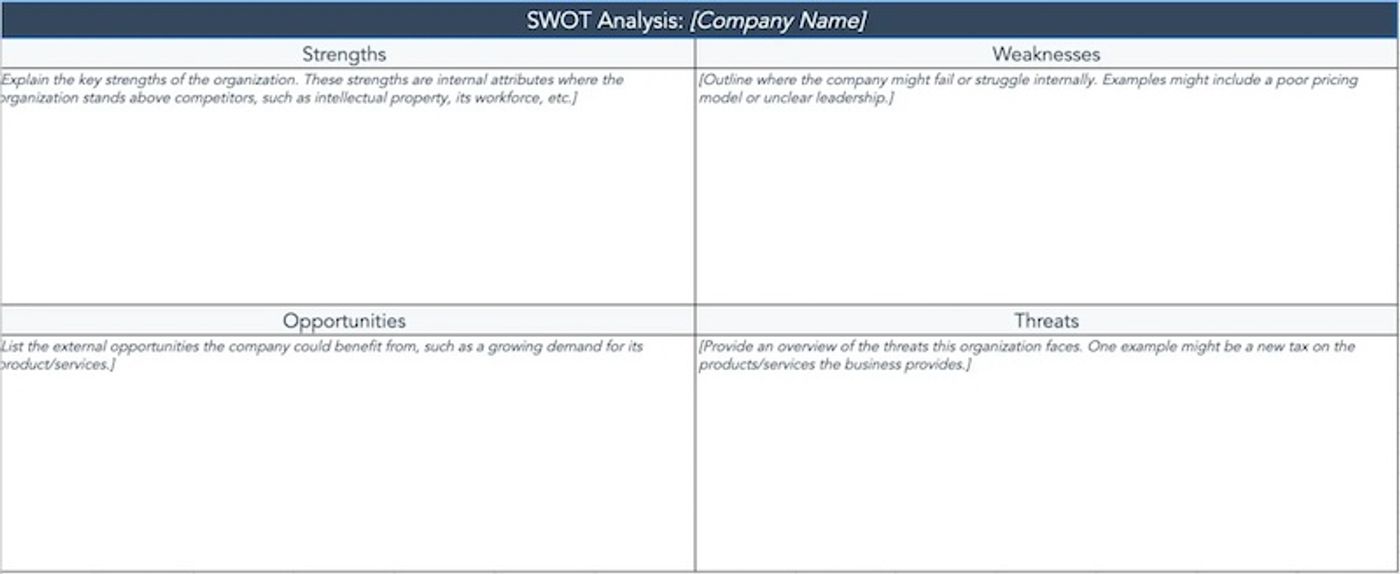
SWOT Analysis
- Strengths: Showcase what sets your startup apart. Highlight proprietary technology, a strong team, brand loyalty, or early traction to demonstrate your competitive advantage.
- Weaknesses: Acknowledge areas for improvement, such as pricing, team building, or brand awareness. Outline your plans to address these weaknesses and strengthen your position.
- Opportunities: Identify market gaps, shifts in consumer behavior, or new trends that your startup is ready to capitalize on.
- Threats: Recognize potential risks, including new competitors or regulatory changes, and outline strategies to mitigate these threats.
Porter's Five Forces
- Threat of New Entrants: Evaluate how easy or difficult it is for new competitors to enter your market and what barriers to entry exist.
- Bargaining Power of Suppliers: Assess the influence suppliers have over the cost and availability of resources for your business.
- Bargaining Power of Buyers: Determine the power customers have over pricing and quality in your industry.
- Threat of Substitute Products or Services: Understand how vulnerable your market is to alternative products or services.
- Industry Rivalry: Analyze the level of competition within your industry and how it could affect your business's success.
PESTEL Analysis
- Political: Assess how political factors and policies impact your industry or market.
- Economic: Evaluate economic trends that might influence your business, such as market growth, inflation, or interest rates.
- Social: Look at societal trends, such as changes in consumer behavior or demographic shifts, that could affect your market.
- Technological: Examine how advancements in technology influence your industry and could present new opportunities or threats.
- Environmental: Consider environmental factors, such as sustainability and regulatory pressures, that play a role in your market.
- Legal: Be aware of the legal requirements and risks in your market and how they may affect your operations.
Blue Ocean Strategy
This strategy focuses on finding untapped markets with minimal competition, rather than competing in overcrowded spaces. By identifying innovative niches, your startup can establish a strong position with less competitive pressure.
Competitor Profiling
Analyzing competitors in detail—such as their business models, products/services, marketing strategies, customer support, pricing, and brand identity—helps you understand their strengths and weaknesses. This information enables you to identify gaps and opportunities in the market.
Benchmarking
Benchmarking compares your startup’s performance with industry leaders in key areas like cost, quality, innovation, and customer satisfaction. This helps you learn from the best and adopt best practices to improve your own business and enhance your competitive edge.
By using these competitor analysis tools, you not only gain a deeper understanding of your market but also present a strong case to investors showing that you’ve thoughtfully considered your competitive environment and have a strategic plan in place.
⏩️ 11 Types of Competitor Analysis Frameworks
Example of a competitor analysis template from Hubspot.com
⏩️ Check for more Competitor Analysis Templates here
Conclusion
A good competitor analysis template helps you understand where you stand and how you can improve. It’s not just about watching what others do—it’s about using that knowledge to make smarter decisions. By learning from their strengths and weaknesses, you can find new opportunities, improve your marketing, and stand out in the market.
More to read:
⏩️Cohort Analysis: A Startup's Secret Weapon