
What a week in China taught us about the future of robotics
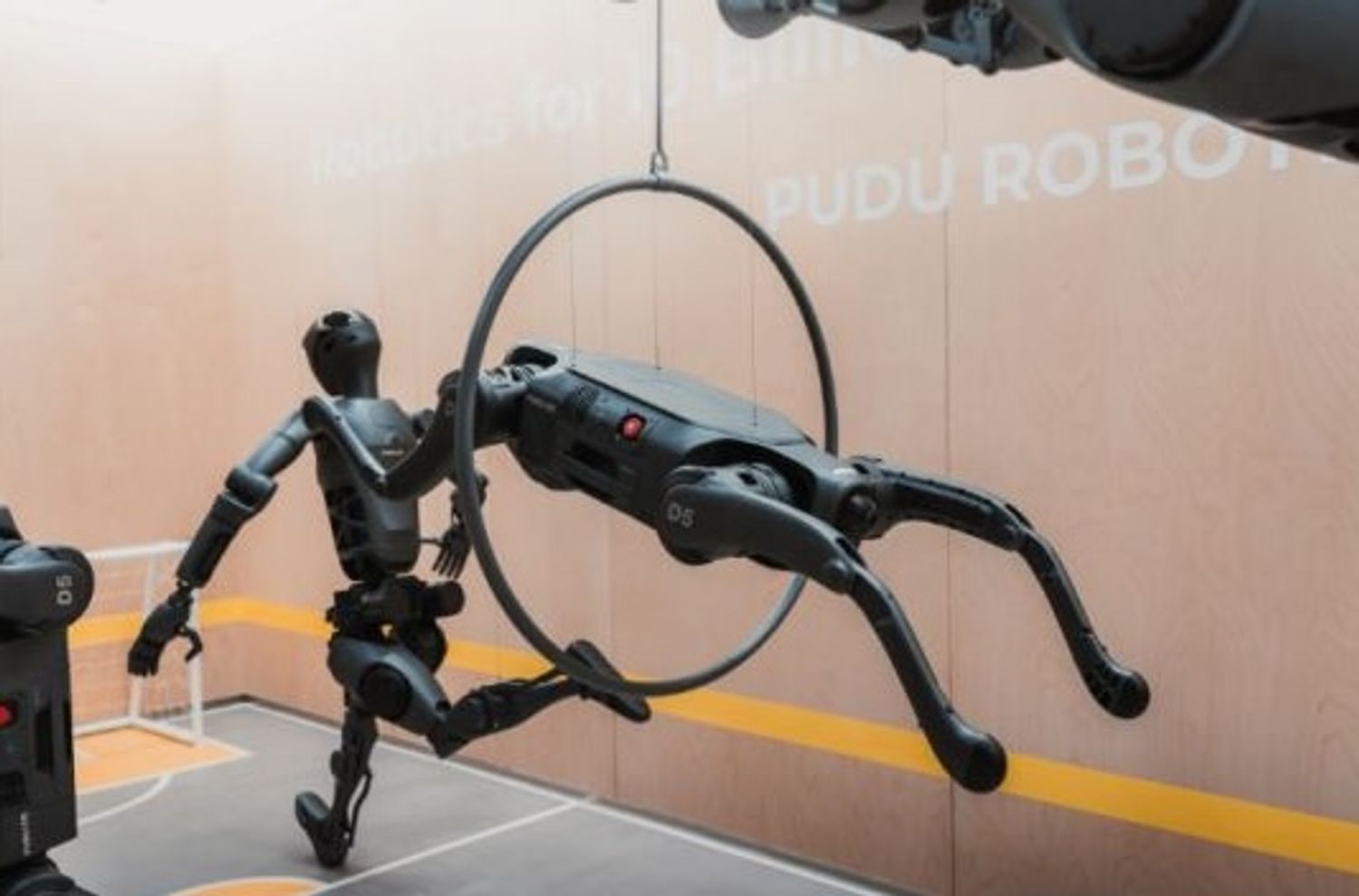
Europe cannot afford to confuse past leadership with future relevance. That is the main thing I brought home from a week in China.
Together with Koen Christiaens, co-founder and managing partner of Pitchdrive, and a group of entrepreneurs and business leaders from the Benelux, I visited Beijing, Guangzhou and Shenzhen. Our timing was notable: APEC had just brought world leaders together in the region.
We had one main goal: to understand where robotics stands today. It is a question that matters to us as investors. Roughly 10% of the startups that come to Pitchdrive are already robotics-related, mostly on the AI and software side. Here are five lessons from the trip.
1. Speed is not a slogan, it is how they operate
The companies we visited bring the speed of today's AI software world to hardware. They prototype, test, improve and scale in short, relentless cycles.
What makes this possible is the ecosystem. Models, components, factories and customers sit close together and connect in weeks, not quarters. A hardware iteration that would take months in Europe can happen within a single product sprint.
2. Scale changes the game
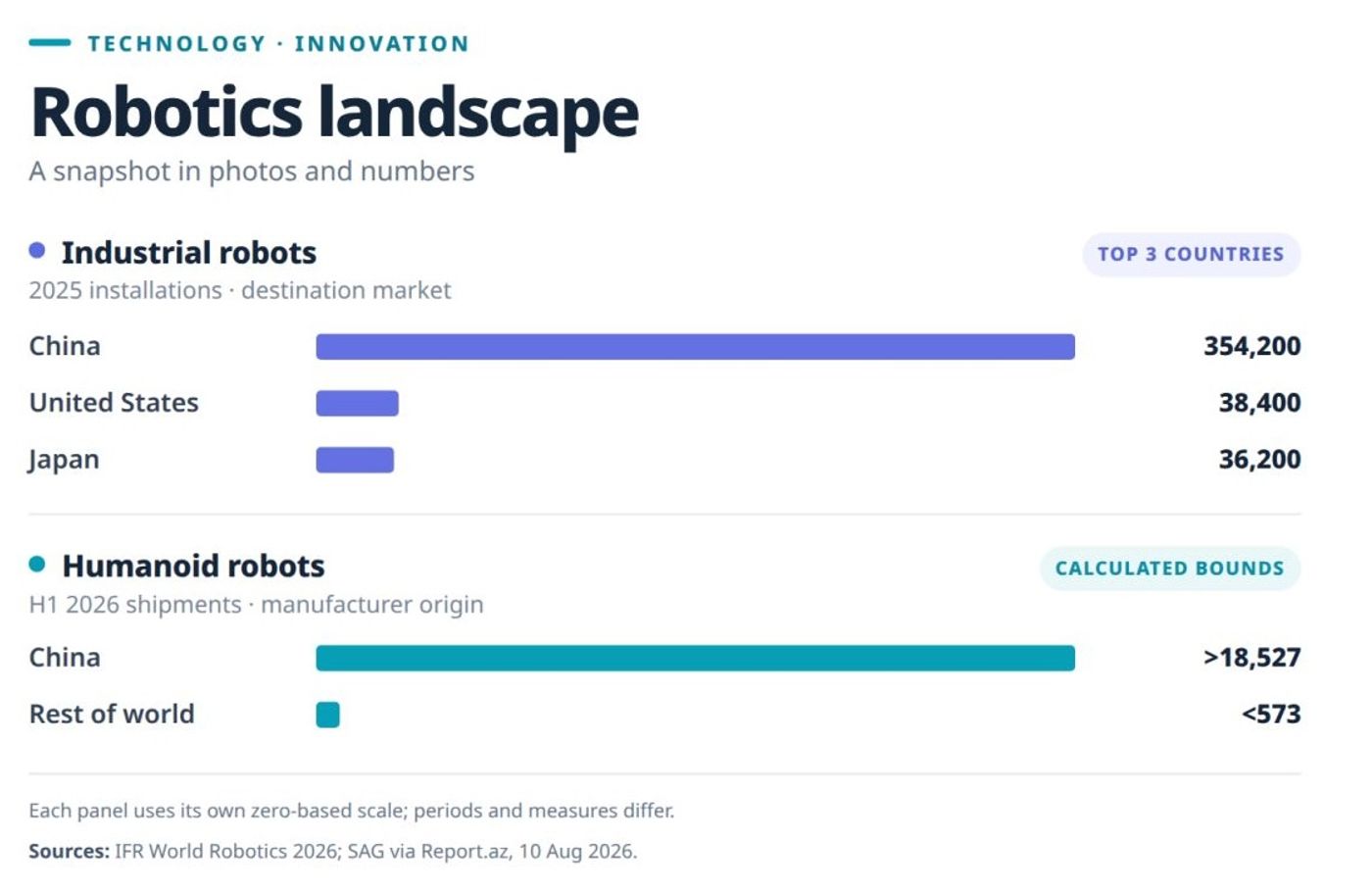
The numbers are hard to ignore:
- China installed around 354,000 industrial robots in 2025, 59% of the global total.
- Chinese manufacturers supplied over 97% of the 19,100 humanoid robots shipped worldwide in the first half of 2026.
That combination of scale, speed and supply chain makes me believe China's lead in robotics hardware will be hard to displace for years to come. European startups should plan around that reality rather than against it.
3. A dancing robot is a demonstration, a useful robot is a business
Impressive demos are everywhere. But solving a customer's problem reliably, day after day, takes more than hardware. It takes software, intelligence and deep industry knowledge.
For European startups, that gap is the opportunity. The value is increasingly in making robots useful in a specific context: a factory floor, a warehouse, a hospital, a farm. That is where European founders with domain expertise can win.
4. Frontier AI is no longer a closed-model monopoly
At Moonshot AI, the company behind Kimi, we saw how competitive open-weight models have become. In Moonshot's own published coding benchmark, their model comes close to Claude Opus.
This matters for European companies. Self-hosting open-weight models gives more control over data, deployment and costs, provided the right security safeguards are in place.
Some are already moving. Revolut, Europe's biggest neobank, made a self-hosted version of the Chinese model GLM its default for AI coding and reports roughly 90% lower AI coding costs. That figure excludes cloud, staffing and monitoring costs, and closed models like Claude and Codex remain available as options. Still, the direction is clear.
5. Europe needs ambition, not nostalgia
At Pitchdrive, we see real opportunities in combining global technology with Europe's own strengths:
- Creativity and design
- AI and software talent
- Specialised chip design
- Industrial expertise
- Trusted customer relationships and home-market knowledge
For decades, many Western companies built successful businesses through partnerships in China. The world has changed, but many of those complementary strengths still matter.
The current crisis in the European automotive industry is a wake-up call. In my view, part of it is self-inflicted: too slow to innovate, and too confident that past success would protect future leadership. We should learn from that overconfidence, without freezing up.
We don't need to lead every layer. We do need to own meaningful value. That means cooperating without becoming dependent, and building capabilities without trying to invent everything ourselves.
What this means for founders
I left China with fewer certainties, but with a greater sense of urgency to build and to collaborate.
If you are a European founder working on robotics, applied AI or the software that makes hardware useful, we want to hear from you. Pitchdrive invests at pre-seed and seed, with tickets up to €2M.